


The Story of D.C. Punk’s First Zines: Howard Wuelfing on the Mission of Descenes
Transmission 260: Interview with Howard Wuelfing
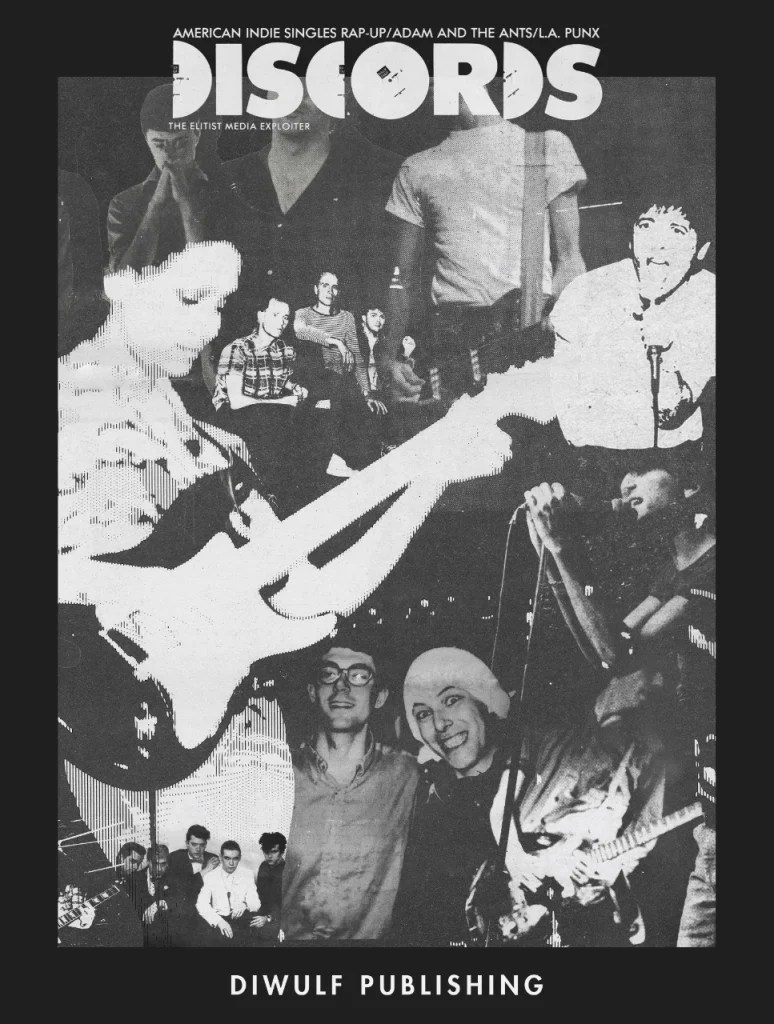
DiWulf Publishing released Descenes and Discords: An Anthology in August 2025, preserving the early development of punk through reprinted materials. The collection gathers publications originally produced in Washington, D.C., from the late 1970s to early 1980s. These publications chronicled the scene’s defiant, DIY spirit through its frequent clashes with club owners, mainstream media, and the polished conventions of the music industry.
Published by writer and musician Howard Wuelfing, Descenes was a hyperlocal chronicle of D.C.’s burgeoning punk and new wave communities, featuring acts like Bad Brains and Half Japanese. As the movement grew, Discords expanded its focus nationally, covering bands such as Black Flag and Mission of Burma with the same DIY authenticity.
In the introduction to Issue #1, you state the goal was to “promote fun” and build a “vital, ongoing community.” Looking back, what was the specific moment or event that made you decide, “We have to create our own publication for this”?
I had been dissatisfied with the lack of substantive coverage of the nascent Punk scene in D.C. by the local daily paper and entertainment monthly. On a trip to NYC, I came across one of the early issues of NY Rocker. It was devoted exclusively to local, mainly unsigned and unrecorded bands, and often musicians were the ones doing the writing. That was definitely the inspiration for Descenes!

Ian MacKaye describes his introduction to punk as being shaped by a hostile mass media. How did your own first encounters with punk shape the mission and tone you wanted to establish with the zine?
I had moved to D.C. having just become aware of the NYC scene. I was hoping to find and hopefully participate in a similar community in my new home. The D.C. scene was tiny at first, one venue, The Keg, a handful of bands. So I became part of a group working to cultivate and grow the scene. We’d always been hunting for more venues to play in, book one another as openers when we’d land a gig. Starting Descenes was just one more tool in our tool belt for trying to expand and support this grass roots community.
What is your most vivid personal memory of the physical “cut and paste” production process, and do you feel something essential has been lost in the transition to digital media?
My most vivid memories might be the feel of the wax that you’d coat the back of copy with to affix it to the page and its smell.
You, Tina, and Mark Jenkins all had day jobs in publishing and “appropriated” key resources. Was there ever a close call or a moment you feared getting caught, and what was the contingency plan if you lost access to those tools?
We were all very careful to not get caught. But even more importantly, we made sure to be model employees otherwise who performed well and worked hard. The hope was that if any of us got caught we’d just get a slap on the wrist. But if we could access these technical resources that likely would have been the end of the ‘zines!


The front cover logo for Issue #2 was hand-drawn in White-Out at the last minute. What other acts of improvisation or happy accidents during layout became defining features of the zine’s aesthetic?
When you’re doing lay out with hard copies of the text and art with no opportunity for re-running the text or reshooting the pictures you work hard to squeeze things in or stretch them out. If there were any blank spaces left when you’d finished laying down the printed-out materials you’d need to type something on a home typewriter, hand draw a graphic, snip a picture out of a newspaper and glue it in place.
At the time, did you perceive the divide between the older and younger punks as a serious schism, and how did you navigate your role as an editor in documenting that tension?
First there were just the first wave of punks, writing songs, practicing, playing out, recording if possible. Then these high school kids started showing up at the record stores some of us worked at. They hung out, asked questions, eventually introduced themselves and let us know that they were starting to make music as well. Despite difference in fashion and musical influences they were welcomed as valuable additions to the growing underground music community.

Several articles criticize club owners at venues like The Atlantis for their mistreatment of bands and fans. Did Descenes ever receive direct backlash from these owners for publishing such critiques?
Other local zines had complained about the behavior of several club owners and their editors were in fact harassed when they tried to enter those venues. Descenes staff were boycotting such venues by the time we attacked them in print.
Looking back, how intertwined were the personal relationships of the core team with the creative drive and survival of the zine?
Everyone was friend or romantically involved so we had built in solidarity that was invaluable in making all this happening with no funding whatsoever. The writing, printing and production was all done by us for free. The advertising I hustled paid for the printing. There were no profits, but no debts. It was a pretty pure social-cultural enterprise!


Reflecting on the “us vs. them” mentality, who was “them”? Was it just the mainstream, or did it also include other factions within the underground scene itself?
“Them” was the established media, most of the venue owners and booking staffs as well as the cover bands that dominated the local scene.
“Us” was united initially, but overtime there was a separation between those devoted to engendering a functioning community of musicians and music lovers all supporting each other and acts that decided to focus on furthering their own professional careers. It did lead to some feuding.
Many contributors, like Gerard Cosloy, went on to become influential figures in independent music. What was it about the fanzine culture of that era that you think served as such a fertile training ground?
Fanzine culture was very inclusive. Anyone who wanted to get involved and contribute could. There wasn’t any auditions to pass. It was assumed everyone was doing there best at any given moment and striving to improve over time. The important point was that these people were willing and able to do the work at the best of their ability.
What article or interview from the entire run of Descenes and Discords are you most proud of having published, and why?
Byron Coley’s feature on Roky Erickson was a highlight of those publications. Coley was and is one of the virulent and original music writers of that or any era and Roky Erickson made some of the most powerful and visionary music of the Rock era.
Is there a band you featured that you felt was criminally overlooked at the time and truly deserved to break out?
“Break out” of course is a relative term. Mission of Burma, for instance, achieved considerable underground acclaim but never achieved the mainstream popularity of other acts that had been part of the late 70’s underground like R.E.M. or the B-52s despite having a distinctive aesthetic identity, songs, and performing prowess equal to or perhaps even more powerful than theirs.
Photos courtesy of Howard Wuelfing

Matteo Damiani is an Italian photographer and author. Curator of the sites Retrofuturista.com; weirditaly.com; china-underground.com and others
Discover more from RetroFuturista
Subscribe to get the latest posts sent to your email.
