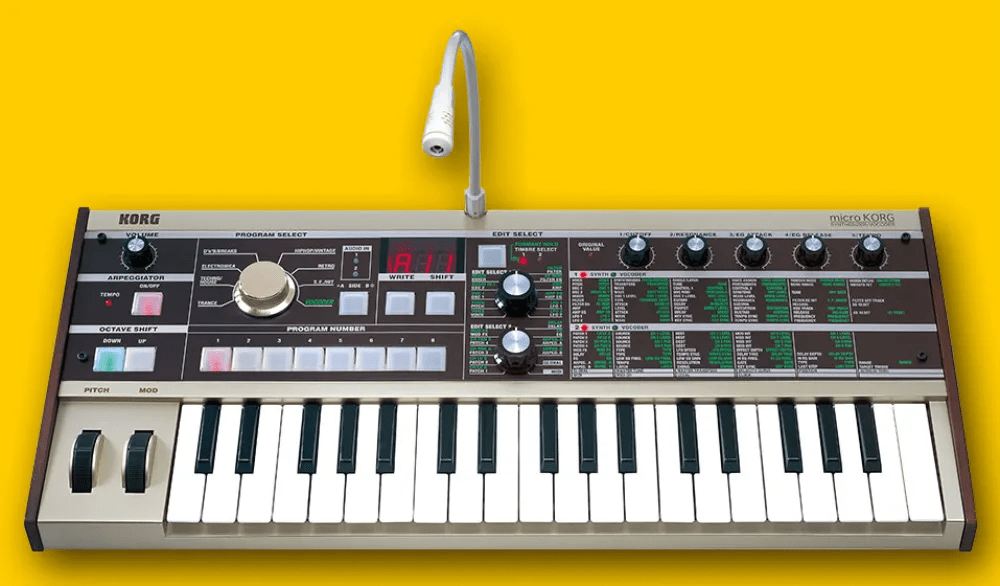
I acquired my MicroKorg back in 2010 while living in Kunming, at a time when I was looking for an alternative to the inherent limitations of my vintage Yamaha CS-10. Although that 1977 monophonic synthesizer remains a powerhouse of character with its unique multimode filter and raw analog signal path, I needed a more versatile tool for the road. Speaking of character, the MicroKorg possesses an almost overbearing personality. Released in late 2002, this surprisingly affordable hardware became a staple of the decade, effectively acting as a vast library of the most iconic electronic textures of the era, from organic ambient patches to aggressive techno leads.
The architecture is based on the MS-2000’s virtual analog synthesis engine, offering four-voice polyphony and a distinctively gritty 8-band vocoder. While Korg later updated the line with the MicroKorg XL in 2009, introducing the Radias-based MMT engine, and the subsequent XL+ in 2012 with its expanded PCM ROM for "vintage" instrument emulations, the 2002 original maintains a specific lo-fi digital warmth that its successors often lack. The interface is straightforward, utilizing two primary large rotary switches to navigate genre-based presets, all of which can be modulated or processed through external effects to further saturate the sound. Perhaps its only drawback is its own success: many factory programs are so architecturally distinct and historically ubiquitous that they are instantly recognizable to any seasoned producer or listener.