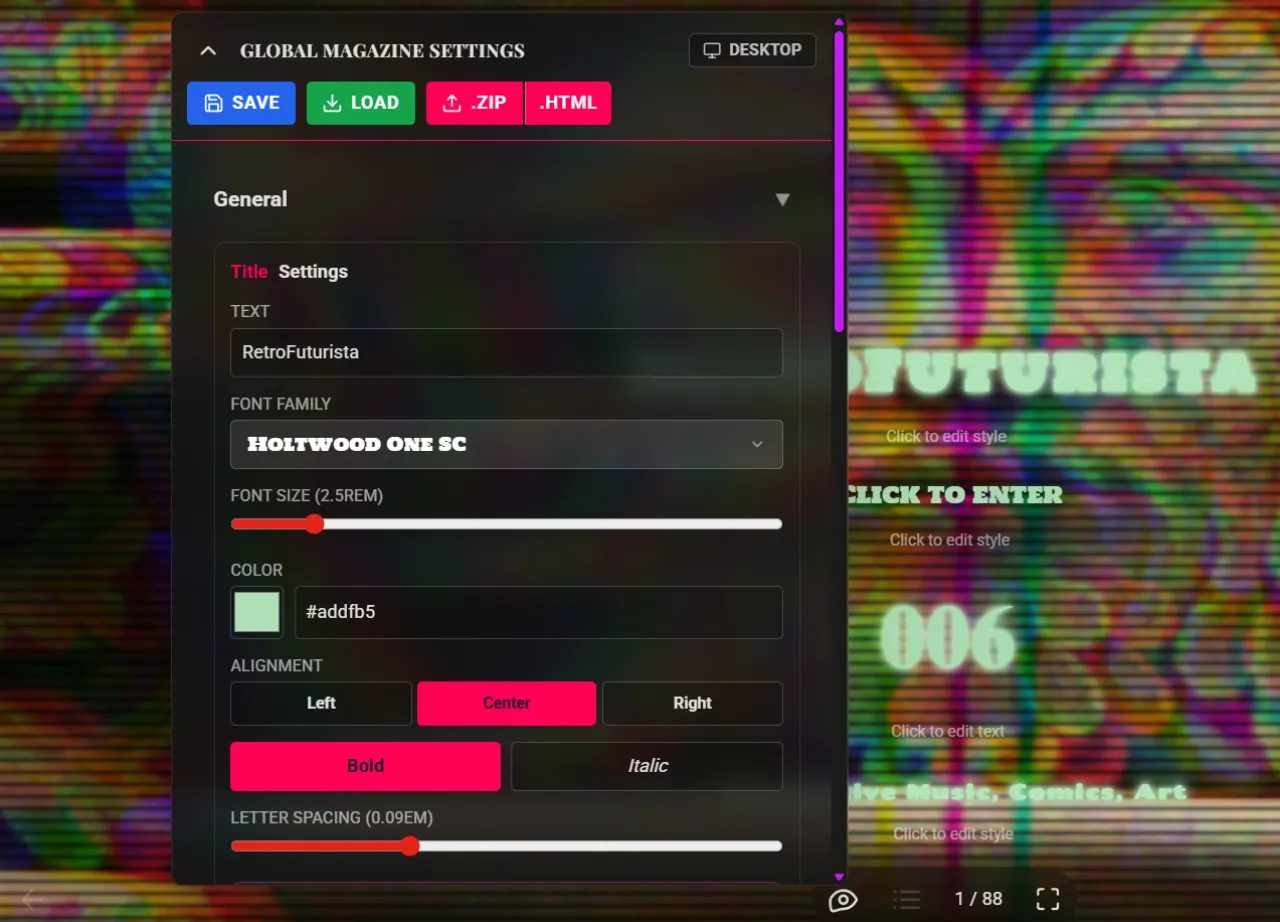
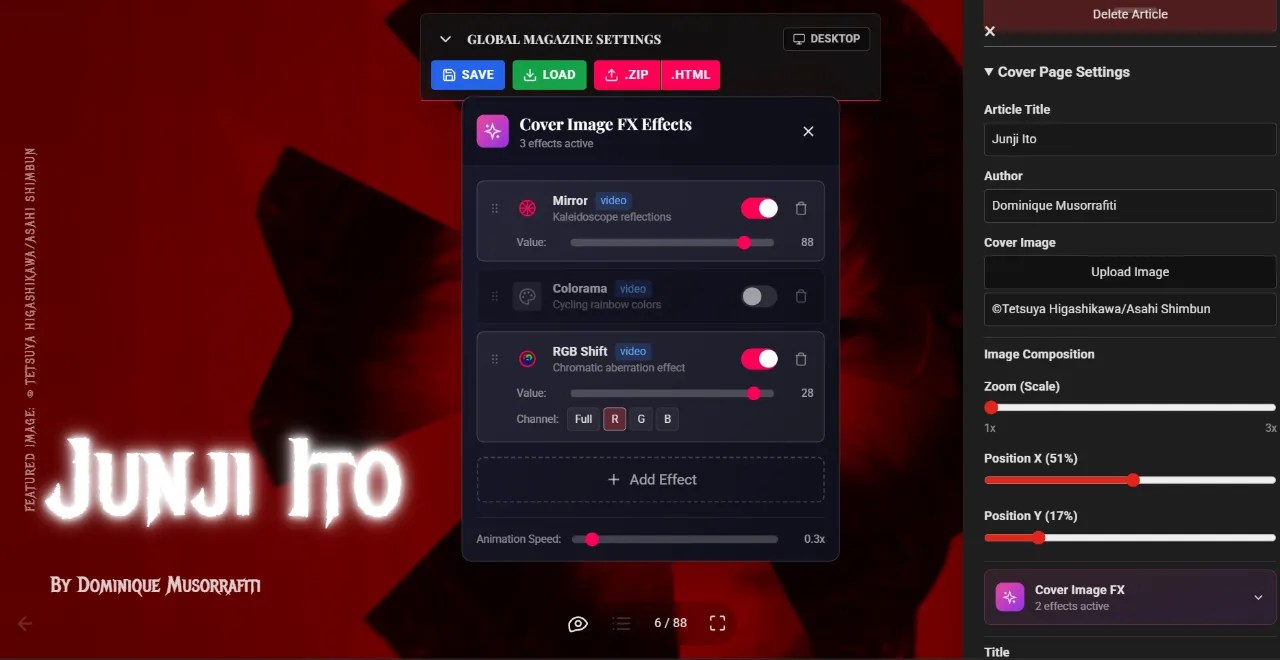
I’ve finally moved RetroFuturista away from the rigid PDF format, and Issue 006 marks the official debut of this shift. To be honest, this project was born out of pure boredom with InDesign. I found the traditional pagination process tedious and static—it simply didn't align with my vision for the magazine’s future. What started as a modest idea for a simple web-to-magazine importer turned into a complete rethink of digital layouts. After a disastrous first attempt, I realized I wanted a creative space where motion, typography, and experimental "glitch" aesthetics could coexist naturally.
The result is a custom, block-based editor designed for aesthetic independence.
Technical Highlights
Dynamic Visuals: The engine integrates over 2,000 Google Fonts and a proprietary FX chain. I can apply real-time effects like RGB Shift, Pixelate, and Scanlines to both text and images.
The ShapeDrawer: One of the most vital tools I built allows for complex text-wrapping around images (CSS shapes), achieving that high-end magazine feel that is usually a nightmare to code for the web.
App-in-App Architecture: The magazine now acts as a container. I can embed entire HTML/JS modules—like mini-games or synthesizers—directly into the pages via iframes.
Portability and the "Permanent Digital Object"
A major goal was making the content permanent. The editor now exports the entire issue as a standalone static site. You can download a ZIP file, open the index.html, and read the magazine completely offline.
Note on Video: Due to browser security and YouTube's embed policies, videos don't play directly in the offline version. I've implemented a "Play on YouTube" fallback to keep the local package lightweight and error-free.
Current Specs at a Glance